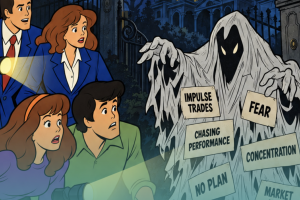
Every year, the same pattern repeats. Documents are gathered, statements are reviewed, and the numbers that have been quietly building over the past twelve months are finally brought into focus. What should be a straightforward process often feels rushed, reactive, and unnecessarily stressful. It is easy to assume that the issue lies in the complexity of the tax system itself. In reality, the pressure comes from timing.
For most individuals and business owners, financial awareness is concentrated in a short period at the end of the year. Income, distributions, capital gains, and tax obligations are evaluated together, often without the context needed to fully understand how those outcomes were generated. By the time the numbers are reviewed, they are no longer decisions. They are results.
This is why tax season feels uncomfortable. It is not because the rules are difficult. It is because the outcome has already been determined before attention is applied.
The Real Issue Sits Inside the Investment Strategy
When tax season creates stress, it is often perceived as a tax-strategy problem. The instinct is to look for ways to reduce the immediate burden, adjust filings, or find deductions that might improve the outcome.This approach treats the symptom, not the cause. The real issue is that investment decisions are being made without a clear understanding of how they translate into after-tax results. Portfolios are built around performance, diversification, and risk, but the structure of return generation is often overlooked. Interest income, dividends, realized gains, and distributions each carry distinct tax implications, yet they are rarely considered in the design process.
When these elements are not aligned, tax outcomes become unpredictable. Investors are left reacting to results rather than being guided.
Why Most Investors Experience Year-End Surprises
The disconnect between investment structure and tax outcomes creates a pattern that is both common and avoidable. Throughout the year, portfolios generate activity. Income is distributed, positions are adjusted, gains are realized, and funds are rebalanced internally. Much of this occurs without immediate visibility or focus, particularly when accounts are not reviewed regularly or when attention is directed toward short-term performance rather than underlying structure.When year-end arrives, all of that activity is consolidated into a single moment of clarity. The result can be unexpected taxable income, higher-than-anticipated liabilities, or outcomes that do not align with the investor’s expectations.
The frustration comes from the realization that nothing can be changed. The decisions have already been made, even if they were not fully understood at the time.
What Changes When Investment Structure Is Intentional
The solution is not to become more reactive at year-end. It is to remove the need for reaction altogether. A well-structured investment approach integrates tax awareness into portfolio construction and management. This does not mean prioritizing taxes over performance. It means recognizing that how returns are generated is just as important as how much is generated. A tax-efficient investment plan considers both.Different types of income are treated differently. Interest is fully taxable. Dividends receive preferential treatment. Capital gains are only partially taxed. Return of capital adjusts the cost base rather than creating an immediate tax liability. These are not technical details. They are fundamental characteristics that directly affect real outcomes.
When portfolios are constructed with this in mind, results become more predictable. Income is generated intentionally. Gains are realized with awareness. Distributions are understood before they occur. The result is a shift from uncertainty to alignment.
The Difference Between Awareness and Control
Reviewing a portfolio once or twice a year may provide a snapshot of performance, but it does not create control. Control comes from ongoing visibility. When financial activity is understood as it happens, decisions can be made with context. Adjustments can be implemented before outcomes are finalized. The relationship between investment decisions and tax results becomes clear, rather than only being revealed after the fact.As discretionary portfolio managers, Brook Wagman Wealth Management & Financial Planning manages this process on your behalf, in line with your plan. The structure is maintained, decisions are implemented consistently, and the day-to-day complexity is handled for you. This allows you to focus on real life while the investment strategy continues to operate as intended.
This does not require constant involvement or unnecessary complexity. It requires a structured approach where key elements are reviewed consistently and decisions are made with a clear understanding of their impact. The objective is not to eliminate taxes, but to avoid unnecessary taxation and reduce surprises.
Why This Is Still an Investment Conversation
This discussion should remain grounded in investment strategy. It is not about turning investment management into a tax strategy. It is about recognizing that tax outcomes are a direct result of how investments are structured. Attempting to address those outcomes at year-end is inherently limited because the underlying decisions have already been made.A proactive approach is more effective than a reactive one in every case. The focus should remain on building portfolios that align with both performance objectives and after-tax realities. This means looking beyond returns in isolation to understand how they are generated and experienced. When this perspective is applied, tax season becomes a checkpoint rather than a disruption.
Investing for Real Life Means Removing Unnecessary Friction
Financial strategies should support the way people actually live, not create recurring sources of stress. Tax season is one of the clearest examples of where friction can be reduced through better structure. When investment decisions are aligned with real outcomes, the need for last-minute adjustments disappears. The process becomes predictable, manageable, and consistent.This is what it means to invest for real life. It is not about avoiding complexity entirely. It is about ensuring that complexity is handled within the structure, rather than pushed into a single point in time to be addressed under pressure.
Build a Structure That Works Before Year-End
If tax season consistently feels reactive or uncertain, it is worth asking whether the underlying investment approach is providing the visibility and alignment needed to avoid those outcomes.The objective is not to change what happens at year-end. It is to change what happens throughout the year so that the year-end becomes uneventful.
To build an investment strategy that integrates structure, awareness, and consistency, speak with a Brook Wagman Wealth Management & Financial Planning expert today. A focused conversation can help ensure that your portfolio is designed not only to perform but also to deliver outcomes that are well understood before they appear on a tax return.