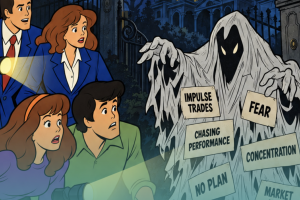
Every investment strategy looks effective when markets are stable. Asset allocations make sense, risk tolerance feels appropriate, and long-term objectives appear achievable. The true test of an investment strategy, however, occurs during periods of uncertainty. Market declines, economic disruptions, geopolitical events, and unexpected volatility place pressure on investors to make decisions quickly. It is during these moments that discipline breaks become most important and often most difficult to maintain.
Periods of uncertainty reveal the difference between having a strategy and following one. Investors may enter challenging market environments with clear objectives and well-defined portfolios, only to abandon those principles when emotions begin influencing decisions. While these reactions are understandable, they often create outcomes that conflict with the very goals investors are trying to achieve. Long-term success depends not only on developing a sound strategy but also on maintaining discipline when conditions become uncomfortable.
Volatility Changes How Investors Think
Market volatility has a unique ability to alter decision-making. During periods of growth, investors often feel confident in their strategy and optimistic about future outcomes. During periods of decline, that confidence can quickly be replaced by concern, uncertainty, and a desire to take action.
This shift occurs because investors are human. Financial decisions are not made in isolation from emotions. Concerns about losing progress, protecting wealth, or missing opportunities can create powerful incentives to change course. Unfortunately, decisions made under pressure often prioritize immediate relief over long-term alignment. The challenge is not that investors experience emotional responses. The challenge is allowing those responses to determine investment decisions that should be guided by strategy rather than circumstance.
Fear and Optimism Create Similar Problems
When discussing emotional investing, market declines often receive the most attention. Fear can certainly influence decision-making, but optimism can be equally disruptive. Strong markets frequently create pressure to increase risk, concentrate investments, or pursue opportunities that appear unstoppable.
Investors may begin believing that recent performance will continue indefinitely. Asset classes that have generated strong returns attract additional capital. Risk tolerance appears higher because recent experiences have been positive. In many cases, investors gradually move further away from the strategy that originally guided their decisions.
The same pattern occurs during market downturns. Fear encourages investors to reduce exposure after declines have already occurred. In both situations, decisions are influenced by recent experiences rather than long-term objectives. Whether driven by fear or optimism, emotional decision-making often introduces unnecessary risk.
Discipline Exists for Uncertain Periods
One of the most important misconceptions about investing is the belief that discipline matters most when markets are performing well. In reality, discipline is designed specifically for periods of uncertainty. Stable markets rarely require investors to demonstrate conviction. Volatile markets do.
A disciplined strategy provides guidance when market conditions become difficult to interpret. It establishes objectives, risk parameters, and portfolio structure before emotions begin influencing decisions. When volatility occurs, investors can evaluate circumstances through the lens of an established strategy rather than reacting to events as they unfold.
This framework creates consistency. Rather than allowing every market event to trigger a reassessment of goals, investors can focus on whether their long-term assumptions remain intact.
The Cost of Reactive Decisions
Reactive investment decisions often feel productive because they involve action. Investors may believe they are reducing risk, protecting capital, or positioning themselves for changing conditions. While some adjustments may occasionally be appropriate, frequent reactions can create unintended consequences.
Several common outcomes occur when discipline breaks down:
- Selling after significant market declines
- Increasing risk after extended market gains
- Abandoning long-term objectives during volatility
- Chasing recent performance trends
- Making decisions based on headlines rather than strategy
- Introducing unnecessary portfolio turnover
These actions often create a cycle where investors buy and sell at precisely the wrong times. Instead of improving outcomes, reactive decisions may reduce the likelihood of achieving long-term goals.
Markets Reward Patience More Often Than Prediction
Many investors assume successful investing depends on accurately predicting future market movements. While forecasting receives significant attention, long-term results are often driven by something much simpler: patience.
Markets have historically experienced periods of growth, correction, recovery, and expansion. Investors who maintain discipline throughout these cycles often benefit from the long-term forces that drive wealth creation, including economic growth, business development, innovation, and compounding returns.
Investors who frequently adjust their strategy in response to short-term events may miss these benefits. Attempting to predict every market movement is often more difficult than remaining invested within a disciplined framework that supports long-term objectives.
Patience does not guarantee success, but abandoning patience frequently creates avoidable challenges.
Confidence Comes From Structure
One reason discipline becomes difficult during volatility is that uncertainty creates doubt. Investors naturally question whether their strategy remains appropriate when markets become unstable. Without a clear framework, those doubts can lead to significant changes in behavior.
Structure creates confidence by providing a foundation for decision-making. Investors who understand their objectives, risk tolerance, and portfolio design are often better equipped to navigate uncertainty. They are less likely to view every market decline as a threat and more likely to evaluate conditions within the context of a broader strategy.
This confidence is not based on predicting outcomes. It is based on understanding why the strategy exists and how it supports long-term goals.
Long-Term Success Depends on Consistent Execution
The strongest investment strategies are not necessarily the most complex. They are often the ones that investors can maintain consistently through changing market environments. A strategy that is abandoned during every period of volatility provides little long-term value, regardless of how well it performs on paper.
Consistency allows portfolios to remain aligned with objectives while reducing the influence of emotion. It helps investors avoid common behavioral mistakes and creates a more stable path toward long-term financial goals. Over time, this discipline can become one of the most valuable contributors to investment success.
The ability to remain committed to a strategy during uncertainty is often what separates successful long-term investors from those who struggle to achieve consistent results.
Maintaining Discipline When It Matters Most
Every investor will experience periods of uncertainty. Markets will fluctuate, economic conditions will change, and unexpected events will occur. These realities cannot be eliminated. What can be controlled is how investors respond to them.
Maintaining discipline during challenging periods requires preparation, perspective, and a strategy that supports long-term objectives. Investors who remain focused on their goals rather than short-term emotions are often better positioned to navigate uncertainty successfully.
Brook Wagman Wealth Management & Planning helps individuals, families, and business owners develop disciplined financial strategies that support confident decision-making through changing market conditions. By focusing on structure, risk management, and long-term alignment, clients can remain focused on what matters most regardless of short-term market noise.