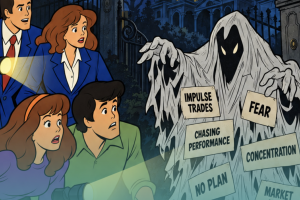
A falling market can change how an investor feels about a portfolio long before it changes what the money is needed for. A retirement plan that seemed reasonable last month suddenly feels uncertain. Investments selected for long-term growth become difficult to hold. The urge to do something grows stronger with every headline. Rising markets can create their own pressure. Watching others make money can make a measured approach feel unnecessarily cautious. In both situations, emotion can influence decisions before the investor recognizes what is happening. The financial cost often develops through a series of choices that gradually move the portfolio away from its intended purpose.
Why Market Movements Feel Personal
Investment balances represent more than numbers. They may reflect decades of work, a future retirement, help for children, or the proceeds from selling a business. When those balances decline, investors can feel that their security and choices are being threatened.
That response is understandable. The difficulty arises when the need for immediate reassurance begins directing decisions about money intended for years ahead. An investor may know that markets fluctuate and still feel compelled to sell during a decline. Understanding volatility intellectually does not always prepare someone for seeing their own savings lose value.
When Confidence Encourages More Risk
Strong returns can make an investment decision feel validated. After several successful purchases, an investor may become more comfortable committing larger amounts or accepting risks they previously avoided. Recent experience begins shaping expectations about what happens next.
Consider an investor who makes a modest investment in a speculative company. The shares rise sharply, and the investor adds more money. Another gain follows, encouraging an even larger purchase. Eventually, a position that began as a small experiment accounts for a meaningful share of retirement savings.
The financial circumstances may be unchanged, but the exposure has grown. If the investment reverses direction, losses apply to a much larger commitment. Confidence built on earlier gains can therefore create consequences that extend well beyond the original decision.
When Fear Drives the Next Decision
During a decline, selling can provide immediate emotional relief. The investor no longer has to watch that holding fall, and cash may feel reassuring. However, the sale also changes the portfolio’s ability to participate if the investment subsequently recovers. Consider a simplified example. An investor buys 1,000 units of a fund at $100 each. The price falls to $80, and the investor sells for $80,000. Later, after the price returns to $100, they reinvest the proceeds and purchase 800 units, before costs. The fund has returned to its earlier price, but the investor now owns fewer units.
This does not mean every declining investment should be held. Some sales are justified by changing needs or deteriorating prospects. The concern is selling to escape discomfort without considering what comes next.
The Pressure to Recover a Loss Quickly
After a disappointing investment, the desire to get back to the starting point can become a goal in itself. An investor may take a larger position, choose a more speculative opportunity, or trade more frequently to recover quickly. The original loss then shapes the next decision. Instead of assessing whether an investment suits the financial plan, the investor focuses on whether it might repair the recent setback. That pressure can make additional risk seem necessary.
A loss deserves review, but it does not obligate the next investment to recover a specific amount. Each new decision should stand on its own merits, with attention to the money available, the risks involved, and the purpose it serves.
When the Purchase Price Becomes an Anchor
Emotion can also encourage investors to hold an unsuitable investment. Someone may decide they will sell only when the price returns to what they paid. Reaching that number can feel like reversing the mistake or avoiding the disappointment of accepting a loss.
Yet the purchase price does not determine the investment’s future prospects. Waiting for a particular price can leave money committed to a holding that no longer fits the portfolio.
A useful question is whether you would buy the investment today, given its current prospects and your circumstances. The answer may support keeping it, reducing it, or reviewing it further. What matters is evaluating the holding based on its role today, not on the desire to make an earlier decision feel better.
How Repeated Reactions Affect a Financial Plan
The cost of emotional decisions extends beyond an individual trade. Repeated changes can create transaction costs and potential tax consequences. They can also alter the portfolio’s risk, interrupt contributions, or leave money without a clear investment purpose. For example, an investor might stop regular retirement contributions during a market decline, intending to restart once conditions improve. If that pause continues, the amount saved falls behind the plan’s assumptions. The issue now involves both investment decisions and savings behaviour.
This is why a review should examine the pattern across decisions. Several choices that each felt reasonable in the moment may collectively produce an approach the investor never intended to follow.
Creating Space for More Deliberate Decisions
A clear decision process gives emotions a place in the conversation without letting them drive every action. Before a significant change, identify what prompted it. Has your income changed? Will you need the money sooner? Has the investment’s outlook materially deteriorated? Or has a price movement made you uncomfortable? Discussing those questions with a wealth manager can help clarify the response. If market losses are consistently difficult to tolerate, the portfolio may need reassessment. Following a plan should include checking whether its assumptions remain realistic.
Agreed review dates, allocation limits, and an approach to upcoming cash needs can also reduce decisions made under pressure. The aim is to make each adjustment explainable in terms of your circumstances and objectives.